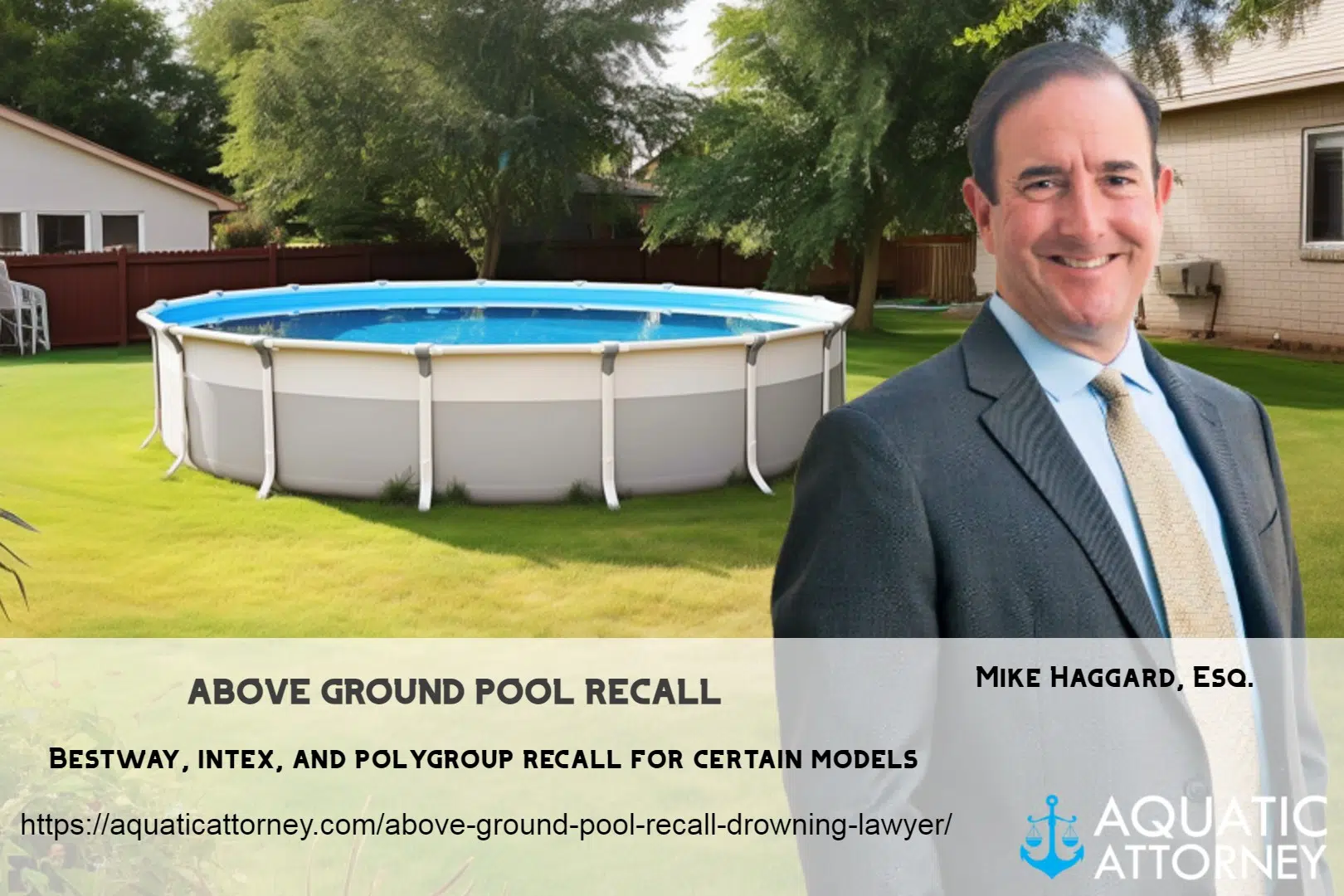
Several drownings and injuries have been reported across the United States relating to the following above ground pools:
If you or a loved one suffered an injury, or tragically lost a child to a drowning from one of these pools, then give us a call.
Our team is experienced in handling these cases nationally.
The Consumer Product Safety Commission (CPSC) recently announced a massive recall impacting an estimated 5 million above ground pools manufactured by leading brands, including Bestway, Intex, and Polygroup. These pools, often 48 inches and taller, have been sold nationwide since 2002 through major retailers and online outlets.
The recall stems from significant design and safety issues that have been linked to tragic child drownings and numerous non-fatal near-drowning incidents. Many of these pools were marketed as safe, budget-friendly alternatives to in-ground installations, leading to their widespread popularity among families seeking affordable backyard recreation. However, the recall highlights how easily small design flaws can become life-threatening hazards.
Inadequate Ladder Design: Several recalled models had ladders that could be easily removed or tipped, creating unguarded access points for children.
Poor Wall Stability: Thin, flexible pool walls were found to collapse under minimal external pressure, allowing small children to fall in unexpectedly.
Lack of Mandatory Barriers: Many models lacked compliant fencing systems, increasing drowning risks when adults were not present.
False Sense of Security: Marketing claims about “child-safe depth” contributed to unsafe supervision practices.
The recall spans products sold over a 20-year period and affects consumers in every region of the country. Families who purchased these pools may be eligible for repairs, refunds, or replacements, and those impacted by tragic incidents may seek legal compensation. Aquatic Attorney Michael Haggard, Esq. notes that product liability cases involving swimming pools often uncover preventable design flaws that manufacturers failed to address proactively.
From 2007 to 2022, at least nine children—all aged between 22 months and 3 years—died as a direct result of incidents linked to the recalled above ground pools. These tragedies occurred across multiple states, including:
Wisconsin
Michigan
Texas
Missouri
California
Florida
Beyond fatalities, dozens of non-fatal submersion events were also documented, leaving many children with permanent brain damage due to oxygen deprivation. Many of these cases shared common contributing factors:
Unattended toddlers accessing unsecured pools.
Structural collapses causing unexpected water entry.
Lack of compliant barriers required under local pool safety ordinances.
These tragedies illustrate the hidden dangers of improperly designed or insufficiently secured above ground pools. For parents and guardians, this recall serves as a critical reminder that pool safety standards are not optional—they are life-saving. Families who own any of the recalled models are urged to stop using them immediately and contact the manufacturer for resolution. For those already impacted, consulting with Aquatic Attorney Michael Haggard, Esq. may provide a pathway to justice and compensation.
The recalled above ground pools share a critical structural issue—a compression strap design that unintentionally creates built-in footholds. These straps, intended to stabilize the pool walls, form horizontal ridges strong enough for a child to step on, turning the side of the pool into an unintended ladder.
Despite being marketed as 48 inches high—a height typically considered safe from toddler access—these footholds make climbing shockingly easy. A small child can:
Grip the top edge of the pool for balance.
Place feet on the horizontal strap ridges.
Hoist themselves over the wall without adult assistance.
Even when factory ladders are removed, the footholds remain, undermining one of the primary safety recommendations for temporary above ground pools.
Imagine a reinforced fabric wall encircled by two or three thick horizontal straps. Each strap protrudes enough to act like a mini-step. For an agile toddler, this design effectively creates:
| Component | Risk Created |
|---|---|
| Compression Straps | Step-like footholds |
| Flexible Walls | Easy to grip for leverage |
| Top Rail | Acts as a pull-up surface |
Parents are often told to remove or lock ladders when pools are not in use. While effective for traditional smooth-wall models, this advice fails entirely for these recalled designs. Children no longer need a ladder; the pool wall itself becomes a climbing aid.
Aquatic Attorney Michael Haggard, Esq. notes that design flaws like these shift the burden from consumer oversight to manufacturer liability—meaning families affected by these products may have valid legal claims.
The CPSC recall covers a wide range of above ground pool models sold under some of the most recognized consumer brands. These pools, often marketed as affordable alternatives to in-ground installations, were sold nationwide through major retailers including Walmart, Target, Home Depot, Lowe’s, and online platforms like Amazon.
Power Steel
Steel Pro
These models feature metal frame construction and were typically marketed as easy-to-assemble backyard solutions.
Metal Frame
Ultra Frame
Prism Frame
Ultra XTR Frame
Intex pools are among the most widely sold, often promoted for their durability and family-friendly pricing.
Blue Wave
Funsicle
Sand n Sun
Summer Escapes
Summer Waves
Polygroup’s product lines were popular due to quick setup features and a wide selection of sizes and depths.
These recalled pools typically sold in the $400–$1,000 range, making them accessible to millions of households. They were available in big box stores, local hardware retailers, and major e-commerce outlets, contributing to their widespread use.
Aquatic Attorney Michael Haggard, Esq. emphasizes that widespread retail availability does not guarantee safety and that defective design can appear even in trusted national brands.
Understanding your legal rights after an incident involving a recalled above ground pool is critical. These cases often involve multiple responsible parties and complex legal pathways. Aquatic Attorney Michael Haggard, Esq. emphasizes that timely legal action can make the difference between limited compensation and full justice for affected families.
The pool manufacturer is often the primary target in drowning and injury cases. When a product’s design creates inherent dangers, such as the compression strap footholds found in the recalled pools, liability is typically clear. Manufacturers have a duty to:
Design safe products.
Provide adequate warnings and instructions.
Issue recalls promptly when hazards are discovered.
Retailers that continued selling defective pools after the known risks emerged may also face liability. They are obligated to remove recalled products from shelves and notify customers when hazards are identified.
Property owners may be partially liable if they:
Failed to secure the pool area (e.g., missing barriers or unlocked gates).
Ignored local safety ordinances regarding pool ownership.
While owners may not be responsible for design defects, inadequate supervision or safety measures can increase their legal exposure.
Platforms like Amazon and eBay can be held liable if they facilitated the sale of defective pools without adequate recall warnings. Courts increasingly treat these marketplaces as responsible sellers, particularly when they manage distribution and logistics.
These claims target manufacturers and designers whose unsafe products caused injury or death. Plaintiffs must prove the defect existed and directly led to harm.
Surviving family members can file wrongful death lawsuits to recover financial and emotional damages resulting from the loss of a loved one.
Children or adults who survived a drowning incident but suffered brain damage or other injuries can pursue compensation for medical expenses, long-term care, and pain and suffering.
Property owners may also face claims if unsafe conditions—like unsecured ladders or missing pool covers—contributed to the accident, even when the product itself was defective.
Families affected by defective above ground pools may be entitled to significant compensation, including:
Medical Treatment & Rehabilitation: Covers emergency care, hospital stays, and ongoing therapies for survivors.
Funeral & Burial Expenses: Direct reimbursement for final arrangements following a fatal drowning.
Lost Wages & Financial Support: Compensation for income lost due to a parent’s absence from work or long-term caregiving responsibilities.
Pain, Suffering & Emotional Distress: Recognition of the devastating emotional toll on surviving family members.
Punitive Damages: In cases where manufacturers or sellers acted recklessly, courts may award punitive damages to deter future misconduct.
Aquatic Attorney Michael Haggard, Esq. advises that families explore all potential claims promptly, as statutes of limitation can restrict recovery if action is delayed.
When a defective above ground pool results in a tragic drowning or injury, pursuing justice involves far more than simply filing a claim. These cases require navigating complex legal systems, coordinating with multiple defendants, and ensuring families receive the compensation they deserve. Aquatic Attorney Michael Haggard, Esq. emphasizes that experienced legal representation is crucial to achieving fair outcomes.
Cases involving recalled pools are governed by federal recall regulations, state product liability laws, and strict compliance requirements. An experienced lawyer understands how to:
Prove manufacturer knowledge and negligence: Showing that a company knew about design flaws—like compression strap footholds—and failed to act can significantly strengthen your case.
Navigate statute of limitations: Each state has strict deadlines for filing claims. Missing these timelines can permanently bar recovery.
Preserve key evidence: From the defective pool itself to packaging, receipts, and photographs of the incident, proper evidence handling is critical.
Lawyers familiar with CPSC recall processes and federal safety standards know how to leverage these regulations to establish liability and maximize potential claims.
Pool-related injury cases often involve several responsible parties, including manufacturers, retailers, distributors, and sometimes property owners. An experienced attorney will:
Coordinate claims against all potential defendants to ensure no responsible party is overlooked.
Negotiate with insurance companies who may attempt to minimize payouts or deny claims entirely.
Protect your rights during investigations and recorded statements, which can be used against you.
Prevent costly mistakes such as signing releases or accepting inadequate settlements before the full extent of damages is known.
Having legal representation means you are not navigating this multi-party process alone, reducing stress and protecting your best interests.
A skilled lawyer ensures that every loss is accounted for and properly valued, including:
Accurate damage calculations for medical bills, funeral expenses, lost wages, and future financial needs.
Expert witness support from medical professionals, pool safety experts, and economists to validate claims.
Medical documentation and care planning for survivors who may require long-term rehabilitation or specialized therapies.
Aquatic Attorney Michael Haggard, Esq. notes that maximizing compensation often requires deep investigative work and expert testimony to ensure families are not left with unaddressed financial and emotional burdens.
When a pool recall-related drowning or injury occurs, knowing what to do next can protect your family’s health, rights, and financial future. Aquatic Attorney Michael Haggard, Esq. outlines the key steps to take to safeguard evidence and ensure you receive proper support.
Ensure Immediate Medical Care
Call 911 and begin CPR if necessary.
Transport the victim to the nearest emergency facility for evaluation and treatment.
Document the Scene and Pool Model
Take clear photographs of the pool, ladder, surrounding area, and any visible defects.
Note the pool’s make, model, and serial number.
Preserve Evidence and Packaging
Keep the pool, instruction manual, receipts, and original packaging.
Do not modify or dispose of the product until advised by an attorney.
Avoid Admitting Fault or Giving Statements
Do not sign insurance releases or give recorded statements before speaking with a lawyer.
Early admissions of fault can severely limit compensation options.
Identify the Model
Locate the brand and model number on the pool wall, ladder, or instruction manual.
Compare it to known recalled models (e.g., Bestway Power Steel, Intex Ultra XTR Frame, Polygroup Summer Waves).
Where to Find Model Numbers
Check the pool’s label, packaging, or purchase receipt.
Review online order history if bought through an online marketplace.
Use CPSC Resources & Manufacturer Contact
The CPSC recall database lists all affected models.
Contact the manufacturer directly for confirmation and next steps for repairs or refunds.
Why Timing Matters
Legal deadlines (statutes of limitation) can bar claims if too much time passes.
Early involvement allows attorneys to preserve evidence and interview witnesses while memories are fresh.
Information to Gather
Medical records, photos, witness information, and proof of pool purchase.
Any recall notices or manufacturer communications.
Questions for Potential Lawyers
Have you handled product liability and drowning cases?
What is your success rate in similar claims?
How are fees structured?
Contingency Fee Arrangements
Most drowning attorneys work on contingency, meaning no fees unless you win, making professional representation accessible to every family.
Which above ground pools were recalled and why?
The recall affects Bestway, Intex, and Polygroup pools sold since 2002. These pools had compression strap footholds that allowed children to climb 48-inch walls, creating a drowning hazard.
How do I know if my pool is part of the recall?
Check the model number on your pool’s packaging, manual, or product label. Compare it to the recall list published by the Consumer Product Safety Commission (CPSC) or contact the manufacturer directly.
What should I do if my child was injured in a recalled pool?
Seek immediate medical care, document the scene, preserve all evidence, and contact a pool drowning lawyer to discuss your legal options.
How much compensation can families receive for pool drowning cases?
Compensation may include medical bills, funeral costs, lost income, emotional distress, and in some cases, punitive damages. The amount varies based on case details.
Who is legally responsible when a child drowns in a recalled pool?
Potentially liable parties include manufacturers, retailers, property owners, and in some cases, online marketplaces that sold defective pools.
How long do I have to file a lawsuit after a pool drowning?
Each state has a statute of limitations, often 1–3 years. Immediate legal consultation ensures deadlines are not missed.
What evidence is needed to prove a pool drowning case?
Key evidence includes photos of the pool, medical records, witness statements, proof of purchase, and any recall notices received.
Can I still file a claim if the drowning happened years ago?
Possibly, depending on state laws and whether new evidence—like a recent recall—extends deadlines. Consult a lawyer promptly.
What if my pool was purchased second-hand or given as a gift?
The recall still applies. Even used or gifted recalled pools may be eligible for claims if their design caused injury or death.
How do recall lawsuits differ from regular pool accident cases?
Recall cases involve proven design defects and manufacturer liability, whereas regular cases may focus more on property owner negligence.
What if the pool manufacturer offers a repair kit?
A repair kit does not erase liability. If injuries occurred before or after the kit was issued, legal claims may still apply.
Can I sue if my child survived but suffered brain damage?
Yes. Survivors may pursue claims for long-term medical care, rehabilitation, lost earning capacity, and pain and suffering.
How do lawyers prove the pool design was defective?
Attorneys use engineering experts, recall data, internal documents, and injury reports to demonstrate design flaws directly caused harm.
What costs are involved in hiring a pool drowning lawyer?
Most work on a contingency fee basis, meaning no upfront cost and fees only if you win.
How long do pool drowning lawsuits typically take?
Timelines vary but can range from several months to a few years, depending on case complexity and court schedules.
The Consumer Product Safety Commission (CPSC) issued a massive recall for approximately 5 million above ground pools from brands like Bestway Power Steel, Intex Metal Frame, and Polygroup Summer Waves, manufactured between 2002 and 2025. This action followed reports of 9 child drownings and numerous near-drownings linked to design flaws such as inadequate ladder designs that failed to prevent unsupervised access. These pools, often 48 inches tall and sold nationwide at major retailers, posed hidden risks despite being marketed as safe family options. Families affected by above ground pool recall drowning incidents should document details like purchase date and model for potential claims. With years handling similar product liability cases, our nationally experienced team guides victims through CPSC processes and compensation pursuits, offering free consultations to evaluate eligibility based on verified recall specifics.
The above ground pool recall drowning affects key brands including Bestway and Coleman (2008-2024 models like Power Steel and Steel Pro), Intex (2002-2025 models such as Metal Frame, Ultra Frame, Prism Frame, and Ultra XTR Frame), and Polygroup (2006-2025 lines like Blue Wave, Funsicle, Sand n Sun, Summer Escapes, and Summer Waves). These pools were distributed nationwide through retailers and online, leading to 9 confirmed child deaths and many injuries due to safety defects. Understanding your pool's brand and manufacture year is crucial for above ground pool recall drowning claims. Licensed attorneys familiar with CPSC regulations review ownership records and incident reports to build strong cases, often securing settlements for medical costs and losses with transparent fee structures and no upfront costs.
Check your above ground pool's model against the CPSC recall list: Bestway Power Steel (2008-2024), Intex Ultra Frame (2002-2025), Polygroup Summer Waves (2006-2025), among others totaling 5 million units. Look for manufacturing dates on the pool frame or liner, and verify height (typically 48 inches or taller). The recall addresses drowning risks from poor ladder safety and entrapment issues reported nationwide. For above ground pool recall drowning concerns, stop use immediately and contact the manufacturer for remedies. In cases of injury or loss, document everything; experienced legal teams with product liability backgrounds assist in proving defect causation, leveraging CPSC data for compensation claims backed by satisfaction-focused representations.
If a drowning occurred in a recalled above ground pool like those from Intex Prism Frame or Bestway Steel Pro, preserve the scene, gather medical records, purchase receipts, and witness statements without moving equipment. Report to the CPSC and local authorities promptly. Above ground pool recall drowning cases often involve proving manufacturer negligence in design flaws leading to the 9 child deaths. Nationally handling such tragedies, teams with decades in personal injury law navigate wrongful death claims, securing compensation for funeral costs, lost future earnings, and emotional distress. Free evaluations assess viability under strict statutes, with proven track records in multi-victim recalls ensuring thorough investigations and insurer negotiations.
Yes, victims of injuries in above ground pool recall drowning incidents from recalled models like Polygroup Funsicle or Intex Ultra XTR can pursue compensation for medical bills, pain, lost wages, and more. The CPSC recall of 5 million pools cites defects causing 9 drownings and near-misses, establishing grounds for product liability claims. Contact Aquatic Attorney mid-process if needed; their nationally experienced attorneys have handled similar cases, offering free consultations and contingency fees so no payment unless successful. With strong ties to safety investigators and transparent claim strategies, they maximize recoveries while adhering to all regulations, providing families reliable support backed by positive client outcomes.
Primary defects in the above ground pool recall drowning include inadequate ladder designs allowing easy child access, weak frame stability leading to collapses, and liner entrapment risks in models like Bestway Power Steel and Intex Metal Frame. These issues contributed to 9 child drownings across 5 million recalled units sold since 2002. The CPSC highlighted how these flaws turned affordable backyard pools into hazards. For above ground pool recall drowning claims, evidence like photos and expert analysis proves negligence. Attorneys versed in these technical failures collaborate with engineers for court-ready reports, pursuing full remedies with no hidden fees and commitment to victim justice.
Statutes of limitations for above ground pool recall drowning claims vary by state, typically 1-3 years from the incident or discovery of the defect in recalled pools like Coleman Steel Pro or Polygroup Summer Escapes. Federal CPSC involvement may extend options, but prompt action preserves evidence. With nationwide experience in these urgent matters, delaying risks claim denial. Gather records now; professional guidance ensures compliance with deadlines, filing demands against manufacturers for the 5 million-unit recall linked to 9 deaths. Contingency arrangements and free initial reviews help affected families without financial strain, focusing on proven recovery strategies.
Yes, for above ground pool recall drowning cases involving the 5 million Bestway, Intex, and Polygroup pools linked to 9 child deaths, national representation is available from firms experienced in product liability across states. They manage claims from evidence collection to settlement without jurisdictional limits. Above ground pool recall drowning requires understanding varied state laws and CPSC protocols. If seeking dedicated help, Aquatic Attorney offers nationwide service with a track record in pool-related tragedies, providing free consultations, contingency fees, and thorough investigations using safety experts for maximum compensation.
Compensation in above ground pool recall drowning lawsuits varies but often covers medical expenses, rehabilitation, lost income, pain and suffering, and wrongful death damages for the 9 reported fatalities in recalled Intex Ultra Frame or similar pools. Settlements from the 5 million-unit recall have reached significant amounts based on case specifics. Factors like injury severity and negligence proof influence outcomes. Experienced counsel analyzes comparables from past CPSC-linked cases to project realistic figures. Transparent processes ensure no surprises, with fully insured practices prioritizing family recovery through skilled negotiations and litigation readiness.
While possible to file independently, a lawyer greatly strengthens above ground pool recall drowning claims against deep-pocketed manufacturers of the 5 million recalled pools. Insurers often lowball or deny without legal pressure, especially proving defects like faulty ladders caused drownings. With hands-on experience in hundreds of product cases, professionals handle CPSC compliance, expert witnesses, and negotiations for better payouts. For complex above ground pool recall drowning matters, free consultations clarify needs; contingency terms mean zero risk, backed by high success rates and client testimonials affirming reliability.
Most lawyers for above ground pool recall drowning cases work on contingency, meaning no upfront fees—you pay nothing unless they recover compensation from the recalled pool manufacturers tied to 9 drownings. Typical rates are 33-40% of settlements, standard in product liability for the 5 million-unit CPSC action. This structure aligns incentives for maximum results. Transparent firms disclose terms early; experienced teams with national reach ensure cost efficiency through efficient case management and proven strategies, allowing families to focus on healing without added financial stress.
Essential evidence for above ground pool recall drowning cases includes pool model details matching Bestway Steel Pro or Intex Prism Frame recalls, incident photos, medical records, purchase receipts, witness accounts, and CPSC reports on the 5 million pools and 9 deaths. Preserve the ladder and frame intact. Technical inspections by engineers link defects to injuries. In practice, comprehensive gathering prevents claim weaknesses; attorneys coordinate with investigators for admissible proof, navigating discovery rules effectively. This methodical approach, honed over years, supports strong demands and favorable resolutions.
Absolutely, above ground pool recall drowning claims apply to pools purchased pre-announcement if manufactured within affected years (e.g., Intex 2002-2025, Polygroup 2006-2025) and involved in incidents linked to the 9 drownings. The CPSC recall covers longstanding defects in 5 million units. Timing of purchase doesn't bar claims; defect existence at sale does. Document ownership history; legal pros experienced in recall litigation verify eligibility, filing timely notices to manufacturers. Free case reviews assess viability with no obligation, ensuring all avenues pursued under applicable laws.
Post-contact for above ground pool recall drowning, expect a free consultation reviewing your recalled pool details (e.g., Bestway Power Steel), incident facts, and evidence. Next, investigation confirms CPSC ties to the 5 million-unit recall and 9 deaths, followed by demand letters to manufacturers. Negotiations aim for settlements; if needed, litigation proceeds with expert support. Aquatic Attorney streamlines this nationally, with contingency fees and satisfaction guarantees, drawing on extensive case experience for efficient, client-centered resolutions minimizing stress.
Class actions may form for above ground pool recall drowning if patterns emerge across the 5 million Bestway, Intex, and Polygroup pools linked to 9 child deaths, consolidating similar claims for efficiency. However, individual suits often yield higher personalized compensation. Monitor CPSC updates; experienced attorneys track developments, advising on joining or pursuing solo paths. With proven involvement in multi-plaintiff product cases, they maximize options through strategic filings and insurer dealings, always prioritizing victim recoveries with transparent guidance.
The CPSC recall of 5 million above ground pools directly bolsters drowning claims by officially documenting defects like inadequate ladders in Intex Ultra XTR and others causing 9 deaths. It provides authoritative evidence of known risks, shifting burden to manufacturers. Claimants leverage recall notices in demands. Legal teams versed in CPSC integrations use this for faster settlements; nationally practiced firms ensure compliance, collaborating with agency experts for robust cases backed by contingency models and high client satisfaction.
Non-fatal above ground pool recall drowning injuries from recalled models like Polygroup Summer Waves qualify for claims covering treatments, therapy, scarring, PTSD, and lost work. The CPSC's 5 million-pool recall and 9 death reports underscore broad liability for near-drownings. Medical evidence proves long-term impacts; attorneys with injury case volume build comprehensive demands. For thorough handling, Aquatic Attorney provides nationwide support, free evals, and no-win-no-fee terms, using safety analyses for optimal outcomes trusted by many families.
Yes, manufacturers like Bestway, Intex, and Polygroup face lawsuits for above ground pool recall drowning defects under product liability laws, given the CPSC recall of 5 million units tied to 9 drownings. Failure to warn or design safely establishes negligence. Courts hold them accountable nationwide. With deep knowledge of these entities' histories, counsel pursues joint-and-several liability for full compensation. Strategies include expert testimonies on ladder flaws, ensuring aggressive yet ethical advocacy.
The above ground pool recall drowning was issued after accumulating data on 9 child deaths and injuries in pools sold since 2002 revealed persistent defects like unstable ladders in Bestway and Intex models. CPSC investigations confirmed patterns despite prior complaints, prompting the 5 million-unit action. Delays often stem from underreporting. For claims, this timeline strengthens foreseeability arguments; experienced litigators use it to prove corporate inaction, securing remedies through detailed chronologies and regulatory filings.
For above ground pool recall drowning legal issues from the 5 million-pool CPSC recall and 9 deaths, visit cpsc.gov for details, then seek counsel via phone or online forms for free consults. Provide model (e.g., Intex Prism Frame), incident date, and records. National firms handle inquiries promptly, assessing claims with no cost. This step initiates investigations into manufacturer liability, with contingency protections ensuring accessibility for all affected parties seeking justice.